ADAPT Research Team
The Headline That Keeps Missing the Northeast
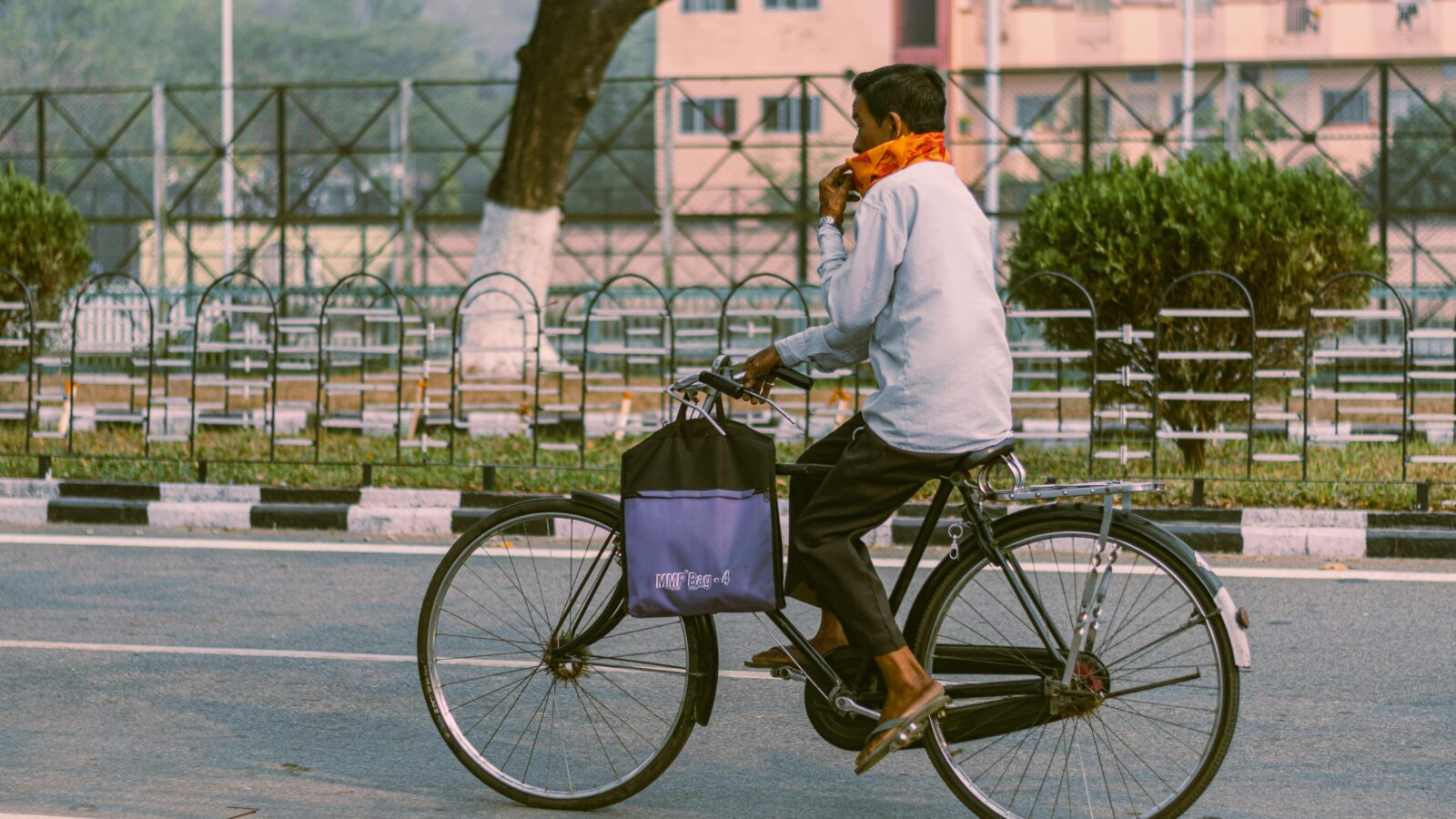
T.S. Eliot in his 1922 masterpiece “The Waste Land” had famously written “April is the cruelest month, breeding lilacs out of the dead land, mixing memory and desire, stirring dull roots with spring rain.” For centuries, English poets celebrated April as the month of renewal, sweet showers and joy but in the times of changing climate and growing extremes, the joy has turned into a cause of concern. 2024 was the hottest year on record and 2026 is expected to witness a “Super El-Nino”. We are in the last week of April 2026 and India has become a “hotbox” sweltering under severe heat stress with temperatures breaching the 40 degree Celsius mark for days on end. It became the epicentre of heat with 95 out of 100 hottest cities on the planet in India only.
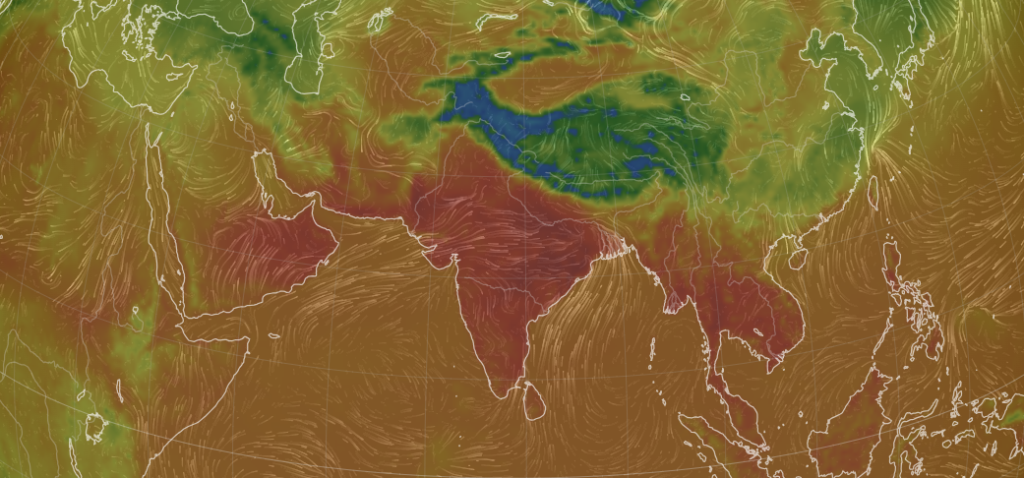
As north and central India swelters under what meteorologists are calling one of the most intense April heatwaves in recent memory and the India Meteorological Department issuing alerts across ten states, the national gaze as always travels westward. To the Thar desert. To the Indo-Gangetic plains. To Delhi.
But the stress of the Northeastern region is barely registered. Quietly and without commensurate attention, the cities of Northeast India are also crossing these thresholds and experiencing growing cases of heatwaves that they never experienced or were designed for. Unlike Jaisalmer or Banda, these cities were built for cool, green, river-flanked ecologies. Their architecture breathes differently. People move and work differently. The social rhythms are different and that is precisely what makes the heat arriving here so consequential as it is not just a temperature rise but an ecological mismatch.
In this piece, we look at what a decade of warming data tells us about six Northeast Indian cities – Guwahati, Shillong, Itanagar, Imphal, Kohima and Aizawl and what it demands of development planning, ecological governance and public policy in the region.
A Decade in Numbers: The Temperature Trend Across Six Cities
Over the past decade, all major urban centres in the Northeast have recorded sustained and significant rises in both daytime and night-time temperatures.
In May 2015, Guwahati’s daytime high stood at around 38.0°C. By May 2025, it had climbed to 40.1°C. Its neighbouring city Shillong, also long known as the Scotland of the East moved from 26.0°C to 28.9°C. Itanagar from 36.0 to 39.2°C. Kohima, a hill station, climbed from around 25.0°C to 28.0°C. Imphal went from 34.0 to 36.5°C. Aizawl shows the same trend.
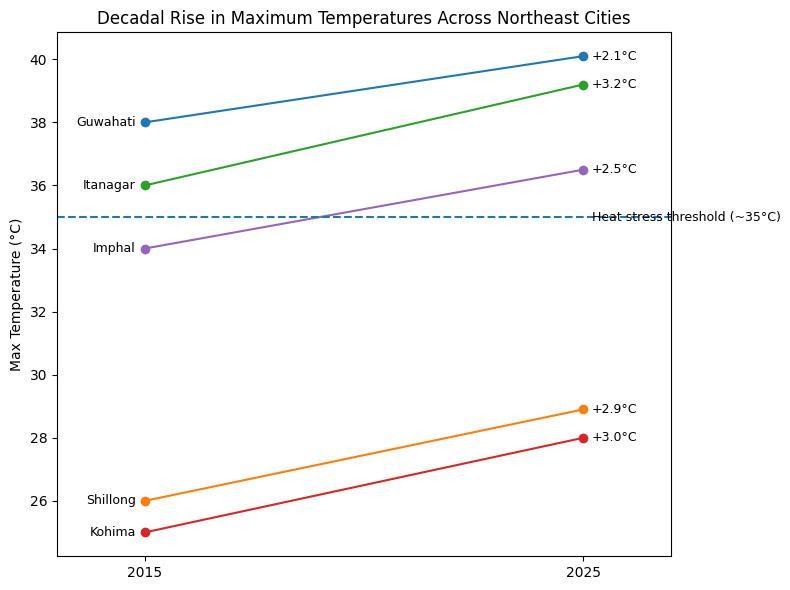
While this may seem a modest two or three degrees increase over a ten year period, it overlooks a very important framing – these cities do not come with a margin for warmth. Their ecology, people, infrastructure and social practices all evolved in considerably cooler conditions and amidst these changes, a Guwahati that regularly crosses 40°C in May is not just hotter, rather a fundamentally different place to live.
What makes this trend more alarming is the increasing number of “warm nights”. Growing warm nights are a major health and environmental concern because they eliminate the crucial overnight “reset” period preventing the human body from cooling down and recovering from daytime heat. In May 2024, one of the hottest heat spells in decades, Guwahati’s minimum temperature was around 27°C, narrowing the diurnal gap which is the difference between day and night temperatures, to just 13°C. Shillong recorded 17-18°C against its typical 14-16°C. Even as the daytime hits record highs, the nights have almost stopped offering any refuge. This sustained, unbroken heat is what drives heat stress, sleep deprivation and the slow deterioration of human and ecological resilience.
And 2026 has arrived with further confirmation. In February, a month that, across most of the Northeast, still belongs to winter, both Guwahati and Imphal recorded above-normal maximum temperatures for all fifteen consecutive days analysed by Down To Earth. This is not an anomaly. It is the new baseline arriving ahead of schedule. The IMD’s seasonal outlook for April to June 2026 is unequivocal: above-normal temperatures are likely over east and northeast India through the coming months. So, we must brace for the hottest months of 2026 that are still ahead and look bleak.
These Cities Were Never Built for Heat
It is worth pausing on this phrase because it is not rhetorical. It is a physical, architectural and ecological fact.
The Northeast’s hill cities like Shillong, Aizawl, Kohima, Gangtok, Itanagar were established by the British colonial administration precisely because they offered relief from the heat of the plains. They were cooler. They were forested. They were built for a specific climate that defined everything from building materials (bamboo, stone, timber) to spatial organization (open courtyards, elevated structures, permeable ground) to daily rhythms (outdoor market life, walking, minimal artificial cooling).
Similarly, Guwahati, Imphal, and Agartala – the river plains cities were shaped by their proximity to rivers and wetlands that naturally regulated temperature and moisture. The Brahmaputra valley has always been humid, but the humidity was balanced by the cooling effect of the river, the wetlands, the forested hillsides and the diurnal temperature swing that gave nights their cool. But today, all of this is changing and what is replacing it is concrete, the most heat-retentive surface known to urban design.
As of April 2026, most of the North Eastern Indian cities do not have a Heat Action Plan. Local authorities are still grappling with drainage, water supply and solid waste management and often end up overlooking heat as a “problem”. This has to do a lot with lack of capacity, how the political economy reacts to environmental challenges as well as a structural financing barrier.
A disaster that kills quietly through cumulative heat stress, reduced crop yields, lowered productivity, livestock loss, waterborne disease and health issues does not generate a dramatic imagery but simply grinds communities down, season by season.
Development That Erases Its Own Cooling Systems
Here lies the central contradiction of urban growth in the Northeast: the very infrastructure of development is clashing with the ecological systems that have historically kept these cities liveable. The clearest case is Deepor Beel in Guwahati, a Ramsar Wetland of International Importance. In the past five decades, the actual water body area has shrunk from 40 square kilometres to approximately 10 square kilometres, owing to encroachment, illegal settlement and the proximity of a garbage dumping yard on its margin. A railway link on the southern boundary has fragmented the lake’s connectivity with the Rani-Garbhanga Reserve Forest, severing an elephant corridor. The Beel is a major stormwater basin for the Brahmaputra River. When it shrinks, Guwahati floods more and Guwahati heats up because the wetland’s evaporative cooling effect is lost.
The conflict between decreasing blue-green infrastructure and expanding grey infrastructure leads to heat generation. Every wetland drained is a degree added. Every hillside cleared is a microclimate destabilised. Every tree felled on a street is shade removed from a pedestrian who has nowhere else to walk.
A TERI assessment of Guwahati’s master plan is pointed in its critique. While the plan discusses housing backlogs and future stock requirements in detail, it does not adequately account for the land requirements of natural features such as wetlands, watershed areas, fragile hilly terrain that are not fit for development but are being progressively absorbed into the city’s expanding footprint. Research using satellite data also confirms the process. Rapid urbanisation in Guwahati has led to declining natural land cover, increased built-up areas, wetland deterioration, deforestation, and habitat loss. The consequence is a measurable Urban Heat Island effect, an urban core that is consistently 2-5°C warmer than surrounding areas compounding the regional warming driven by climate change.
The same pattern plays out, at different scales, across every Northeast city. In Imphal, observers note changing land use, deforestation and rising energy consumption for cooling. In Kohima, forests are being replaced by tracts of cash crops, altering the hillside microclimate. In Aizawl, a city perched on steep ridges at over 1,100 metres, 80 percent of Mizoram’s population is concentrated in one place, and the government itself has acknowledged that the city has become ungovernable in its current form — the Chief Minister proposing a new city at NITI Aayog in 2025, partly because Aizawl can no longer absorb its own growth.
Who Bears the Heat: The Human Dimension
The most tragic thing about heat is that it affects different bodies differently. Research from IIT-Guwahati identified outdoor workers such as farmers, vehicle drivers and street food vendors as the most vulnerable to climate change impacts in the city. They have no adaptation measure available to them that doesn’t cost income. You cannot shade a paddy field. You cannot move a roadside stall into a cool room.
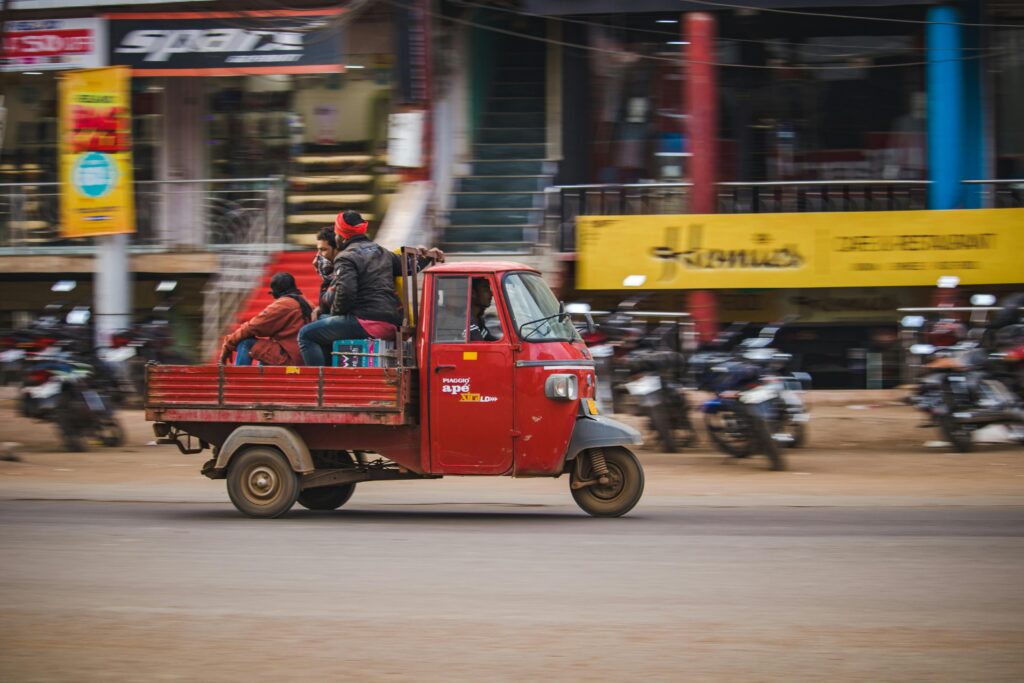
Air Conditioners that were once not even part of conversations are slowly becoming a regular feature in city households! In a region where a large share of the population lives in housing with passive or natural processes for cooling and where ceiling fans are the norm, the narrowing diurnal gap is a genuine public health emergency. Children and the elderly face compounding risks. Informal settlements, which occupy flood-prone and heat-exposed zones across every Northeast city, compound exposure with vulnerability. Women street vendors in Fancy Bazar, Guwahati shield themselves under umbrellas that cannot stop the heat radiating from the asphalt beneath their feet.
The cultural dimension is equally real. Communities across the Northeast have lifestyles, building traditions, food systems and daily rhythms calibrated to a cooler, more moisture-rich climate. From using regular tap water for drinking to using refrigerated water bottles, the shift suggests how far the climate has moved from what a culture was built for.
And then there is the cost of artificial cooling. As heat stress drives demand for air conditioning across the region, energy consumption rises, electricity grids strain and the urban heat island intensifies further because air conditioners pump heat into the outdoor environment. The adaptation itself worsens the problem. It is a feedback loop that only ecological intervention can break.
What Better Planning Could Look Like
Through this piece, we call for a different imagination of what development means in this region. The Northeast still has something that most of India has already lost – its ecological systems are partially intact. The window to build with nature rather than against it has not fully closed. But it is narrowing.
There are four specific shifts in planning and policy that could make a material difference and leverage the natural endowment of the region to build better.
First, Heat Action Plans tailored to Northeast ecologies. Not templates borrowed from other cities. HAPs for these cities need to begin with local vulnerability mapping, identify which occupations, neighbourhoods and populations are most exposed and build responses around the region’s specific ecology and culture. The lesson for the Northeast is to develop their planning capacity before 2030 as a proactive step.
Second, wetland and forest buffers must become non-negotiable elements of Master Plans. Deepor Beel cannot be an afterthought in the Guwahati Master Plan. It must be its centrepiece. The same principle applies to every water body, forested hillside, and natural drainage corridor in every Northeast city. These are not amenities. They are critical urban infrastructure more important to the city’s thermal regulation, flood management and water security than any grey infrastructure project currently under development.
Third, nature-based cooling must be mainstreamed as a development standard. Tree canopy cover requirements, green corridor standards, permeable surface mandates, blue-green infrastructure provisions need to be built into development approval processes across all Northeast cities, not left to the discretion of individual developers and planners. Cities that mandate greenery at the point of development rather than retrofitting it later are consistently more liveable and more resilient.
Fourth, the region lacks an integrated, publicly accessible data commons that tracks temperature trends, heat health impacts, wetland loss and urban land cover change across all states. A singular database jointly governed by state governments, academic institutions, and civil society would feed policy, enable early warning and make the invisible visible for positive outcomes.
The Future We Want
The Northeast is one of the most ecologically rich regions in Asia, a global biodiversity hotspot, the home of the Eastern Himalayan arc, the source of rivers that sustain hundreds of millions of people across South and Southeast Asia. But it is also the region that India’s development planning has most consistently treated as peripheral, a place where infrastructure comes late, where ecological considerations are viewed as obstacles to growth and where climate vulnerability is acknowledged in national reports but rarely acted on in state master plans.
The cities of the Northeast are heating up. Their wetlands are shrinking. Their hillsides are being cleared. Their people are witnessing a climate crisis that their lifestyles and their culture were never designed for.
The question is whether the next generation of Master Plans, budget allocations, urban development schemes and climate action commitments will be written for the Northeast these cities are becoming or for the Northeast they used to be?
Suggested Citation: ADAPT. “Cities That Were Never Built for Heat: The Warming Decade Across Northeast India’s Urban Centers.” Alliance for Development & Progressive Transformation. April 2026.